Mon - Fri 8am-5pm | Bristol & the South West & Nationwide

What Is Underfloor Heating?
Everything You Need to Know.
How It Works
Underfloor Heating Explained
Underfloor heating uses a network of pipes installed beneath your floor to circulate warm water, gently heating the room from the ground up.
Unlike radiators, which heat a room by warming the surrounding air – a process known as convection, underfloor heating is a form of radiant heating. Heat is transferred directly to people and objects in the room, creating an even, comfortable warmth from floor to ceiling, with no cold spots and no draughty air circulation.
It’s now the heating system of choice for architects, developers and homeowners across both residential and commercial properties, and it’s easy to understand why.

The Benefits
Complete control
Set different temperatures in different rooms or zones using programmable thermostats. No more compromising on a single temperature for the whole house.
Energy efficiency
Underfloor heating operates at much lower water temperatures (around 30–45°C) compared to traditional radiators (60–80°C). This makes it perfectly suited to modern, energy-efficient heat sources such as heat pumps. Lower operating temperatures improve overall system efficiency, which can help reduce energy consumption and lower heating bills, while also providing consistent and comfortable heat distribution throughout the room.
No radiators
Free up your walls. Without radiators, you have complete freedom over how you design and furnish each room.
Better air quality
Because UFH doesn’t circulate air the way radiators do, airborne particles, dust mites, bacteria and pollen remain far less mobile. This is particularly beneficial for allergy sufferers and young children.
Where It Can Be Installed
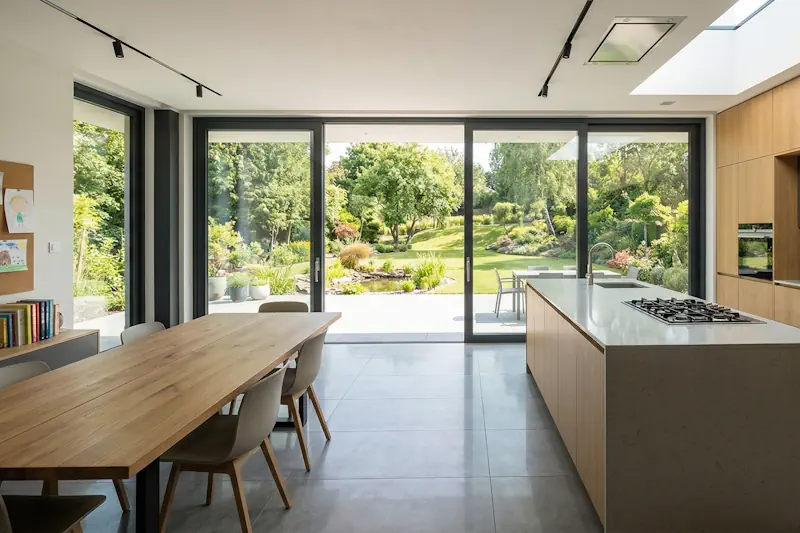
UFH is highly versatile. It can serve as the primary heating system for a new build, be added to an existing property during a renovation, or be installed in a single room such as a kitchen extension or bathroom.
It works with traditional gas boilers and with renewable heat sources including air source and ground source heat pumps. It can also run alongside radiators if you want UFH only in certain areas of your home.
The right system depends on your floor construction type, the number of rooms to be heated, and your heat source. WarmTraceUFH will assess all of these factors and recommend the most suitable solution for your project.
Frequently Asked Questions
Yes, UFH is compatible with most floor finishes, though the finish affects how efficiently heat is transferred. We advise on the best approach for your
chosen flooring as part of system design.
Yes. UFH can be installed as your whole-house heating system, or in a single room such as a kitchen extension or bathroom, and can run alongside existing radiators elsewhere in the property.
It depends on your heat source and insulation, but UFH’s lower operating temperature generally makes it more efficient than radiators – particularly when paired with a heat pump.
Because the screed acts as thermal mass, UFH takes longer to heat up than a radiator but holds heat for longer once it reaches temperature, it’s best suited to being left running at a steady, lower temperature rather than switched on and off.